Ever wondered how top tech teams deploy code in minutes, not months? The secret lies in mastering Azure and DevOps. This dynamic duo is revolutionizing software delivery by blending cloud power with automation brilliance.
Understanding Azure and DevOps: A Modern Development Revolution

The fusion of Azure and DevOps represents a paradigm shift in how software is built, tested, and delivered. Microsoft Azure, a leading cloud computing platform, provides the infrastructure, while DevOps embodies the culture, practices, and tools that enable rapid, reliable software delivery.
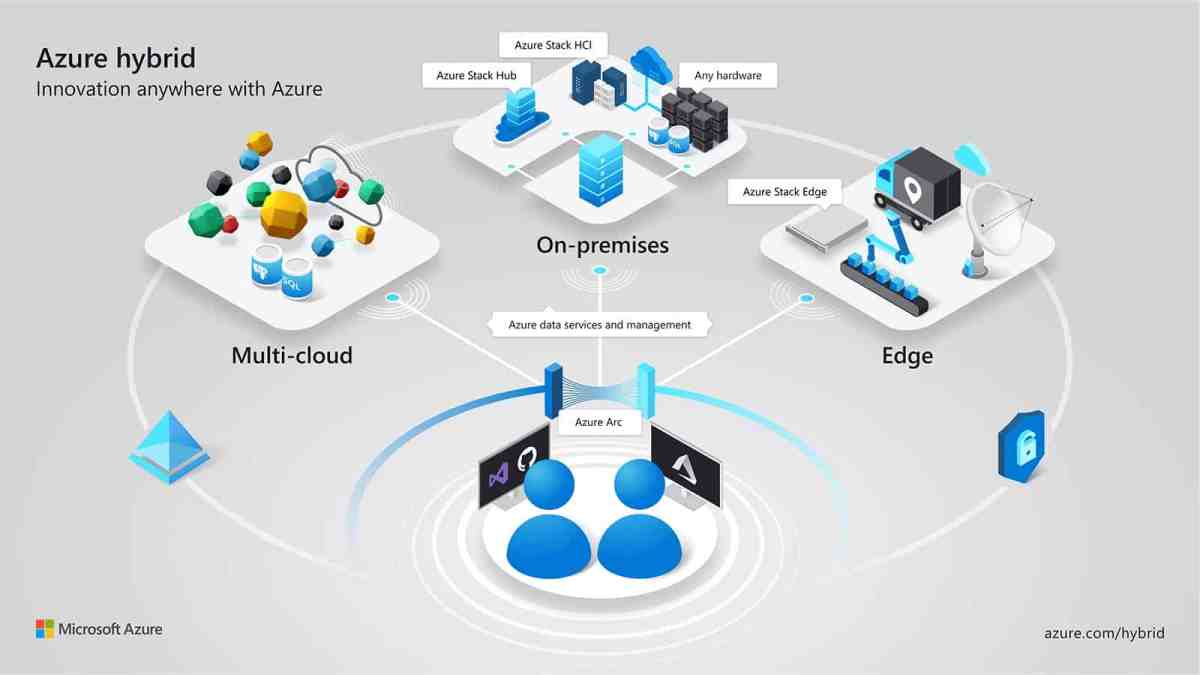
What Is Azure?
Azure is Microsoft’s comprehensive cloud platform offering over 200 services, including computing, storage, networking, databases, AI, and IoT. It supports multiple programming languages, frameworks, and operating systems, making it a versatile choice for enterprises and startups alike.
- Compute services like Virtual Machines, Azure Kubernetes Service (AKS), and Azure Functions.
- Storage solutions such as Blob Storage, Disk Storage, and Data Lake.
- Global data centers in over 60 regions, ensuring low latency and compliance.
Azure’s pay-as-you-go model allows organizations to scale resources dynamically, reducing costs and increasing efficiency. Its integration with existing Microsoft tools like Active Directory and Office 365 makes it a natural fit for many businesses.
What Is DevOps?
DevOps is not a tool or a job title—it’s a cultural and professional movement that emphasizes collaboration between development (Dev) and operations (Ops) teams. The goal is to shorten the software development lifecycle while delivering high-quality, continuous updates.
- Core principles include automation, continuous integration/continuous delivery (CI/CD), monitoring, and feedback loops.
- DevOps breaks down silos, enabling faster innovation and improved reliability.
- It fosters a culture of shared responsibility, where developers care about deployment stability and operations teams contribute to code quality.
“DevOps is not about tools. It’s about people, process, and technology working in harmony.” — Gene Kim, Author of The Phoenix Project
Why Azure and DevOps Are a Perfect Match
The synergy between Azure and DevOps is undeniable. Azure provides the scalable, secure, and flexible environment that DevOps practices need to thrive. Together, they enable organizations to innovate faster, reduce risk, and respond to market changes with agility.
Seamless Integration of Tools and Services
Azure DevOps Services (now part of Azure Boards, Repos, Pipelines, Test Plans, and Artifacts) offers a unified platform for planning, developing, testing, and deploying applications. These tools integrate natively with Azure cloud services, creating a frictionless workflow.
- Azure Pipelines enables CI/CD for any language and platform, with support for GitHub, Jenkins, and Bitbucket.
- Azure Repos provides Git repositories with advanced code review and branching strategies.
- Azure Boards supports Agile project management with Kanban boards, backlogs, and sprint planning.
For example, a developer can push code to Azure Repos, trigger an automated build in Azure Pipelines, run tests in Azure Test Plans, and deploy to an Azure App Service—all without leaving the Azure ecosystem. This tight integration reduces context switching and accelerates delivery.
Scalability and Elasticity for DevOps Workloads
One of the biggest challenges in DevOps is handling variable workloads—such as spikes in CI/CD pipeline executions during release cycles. Azure’s elasticity allows teams to scale compute resources on demand.
- Use Azure Virtual Machine Scale Sets to automatically scale build agents.
- Leverage Azure Container Instances for lightweight, on-demand build environments.
- Deploy self-hosted agents in Azure Kubernetes Service (AKS) for complex, containerized workflows.
This scalability ensures that DevOps processes remain fast and reliable, even under heavy load. No more waiting hours for builds to complete because the server was overwhelmed.
Key Components of Azure and DevOps Integration
To fully leverage Azure and DevOps, it’s essential to understand the core components that make the integration possible. These tools form the backbone of modern cloud-native development.
Azure DevOps Services Overview
Azure DevOps Services is a suite of collaborative tools designed to support the entire software development lifecycle. It consists of five main components:
- Azure Boards: Agile planning with customizable dashboards, work item tracking, and integration with Jira.
- Azure Repos: Git-based source control with branch policies, pull requests, and code search.
- Azure Pipelines: CI/CD with YAML-based configurations, multi-platform support, and deployment to any cloud or on-premises environment.
- Azure Test Plans: Manual and exploratory testing tools with test case management and feedback collection.
- Azure Artifacts: Package management for NuGet, npm, Maven, and Python packages, enabling dependency sharing across teams.
These services can be used independently or together, offering flexibility based on team size and project complexity. They are accessible via the web, CLI, or REST APIs, ensuring seamless integration into existing workflows.
Integration with GitHub and Third-Party Tools
Azure and DevOps don’t exist in a vacuum. Microsoft has made significant investments in interoperability, especially with GitHub, which it acquired in 2018.
- GitHub Actions can trigger Azure deployments directly, enabling CI/CD from GitHub repositories.
- Azure Pipelines can connect to GitHub, GitLab, or Bitbucket, allowing teams to use their preferred source control.
- Azure Monitor and Application Insights integrate with GitHub for observability and incident response.
For example, a pull request in GitHub can automatically trigger a build in Azure Pipelines, run unit tests, and deploy to a staging environment in Azure. This cross-platform compatibility ensures that organizations aren’t locked into a single ecosystem.
Implementing CI/CD with Azure and DevOps
Continuous Integration and Continuous Delivery (CI/CD) are at the heart of DevOps. Azure and DevOps provide a robust, flexible framework for automating the software delivery pipeline.
Setting Up Your First CI Pipeline
Creating a CI pipeline in Azure DevOps is straightforward. Here’s a step-by-step guide:
- 1. Create a new project in Azure DevOps and connect your code repository (Azure Repos or GitHub).
- 2. Navigate to Pipelines and select ‘New Pipeline’.
- 3. Choose your source (e.g., GitHub) and repository.
- 4. Select a template (e.g., ‘Node.js’, ‘Docker’, ‘Python’) or start with a blank YAML file.
- 5. Customize the YAML to define build steps, such as restoring dependencies, running tests, and publishing artifacts.
- 6. Save and run the pipeline.
The pipeline will automatically trigger on every code commit, ensuring that new changes are integrated and tested immediately. This reduces integration issues and improves code quality.
“The goal of CI is to make the build process so routine that it’s boring. If it’s exciting, something went wrong.” — Martin Fowler
Configuring Continuous Delivery to Azure
Once code passes CI, the next step is CD—automatically deploying to production or staging environments. Azure supports multiple deployment targets:
- Azure App Service for web apps and APIs.
- Azure Functions for serverless workloads.
- Azure Kubernetes Service (AKS) for containerized applications.
- Virtual Machines for legacy or custom workloads.
To configure CD, define deployment stages in your YAML pipeline. For example:
deploy:
  - stage: Staging
    jobs:
      - deployment: DeployToStaging
        environment: staging
        strategy:
          runOnce:
            deploy:
              steps:
                - task: AzureRmWebAppDeployment@4
                  inputs:
                    ConnectionType: 'AzureRM'
                    WebAppName: 'my-web-app-staging'
                    Package: '$(Build.ArtifactStagingDirectory)/**/*.zip'
This ensures that only code that passes automated tests reaches production. You can also add manual approvals, canary deployments, or feature flags for added control.
Infrastructure as Code (IaC) with Azure and DevOps
Infrastructure as Code (IaC) is a key DevOps practice that treats infrastructure configuration as software. With Azure and DevOps, you can automate the provisioning and management of cloud resources using code.
Using Azure Resource Manager (ARM) Templates
Azure Resource Manager (ARM) templates are JSON-based files that define the infrastructure and configuration for your Azure resources. They enable consistent, repeatable deployments.
- Define resources like VMs, networks, databases, and storage accounts in a single template.
- Use parameters and variables to make templates reusable across environments (dev, test, prod).
- Deploy templates via Azure CLI, PowerShell, or Azure Pipelines.
For example, an ARM template can provision a complete environment—web app, database, and network security group—with a single command. This eliminates manual setup errors and ensures environment parity.
Leveraging Terraform for Multi-Cloud IaC
While ARM templates are Azure-specific, Terraform by HashiCorp supports multi-cloud infrastructure. Many organizations use Terraform within Azure DevOps pipelines for greater flexibility.
- Write infrastructure code in HashiCorp Configuration Language (HCL).
- Use Azure Pipelines to run
terraform init,plan, andapplycommands. - Store Terraform state in Azure Blob Storage for team collaboration.
This approach is ideal for companies adopting a multi-cloud strategy or wanting to avoid vendor lock-in. It also enables version control, code reviews, and audit trails for infrastructure changes.
Monitoring and Security in Azure and DevOps
DevOps isn’t just about speed—it’s also about stability and security. Azure provides powerful tools to monitor applications and secure the DevOps pipeline.
Azure Monitor and Application Insights
Azure Monitor collects telemetry from applications, infrastructure, and logs. Application Insights, a component of Azure Monitor, provides deep insights into application performance.
azure and devops – Azure and devops menjadi aspek penting yang dibahas di sini.
- Track request rates, response times, and failure rates.
- Set up alerts for anomalies (e.g., high CPU usage, slow database queries).
- Use distributed tracing to debug microservices architectures.
Integrate Application Insights with Azure DevOps to correlate deployments with performance changes. For example, if a new release causes a spike in errors, you can quickly roll back using CI/CD pipelines.
Securing the DevOps Pipeline
Security must be embedded throughout the DevOps lifecycle—a practice known as DevSecOps. Azure offers several features to secure the pipeline:
- Azure Key Vault for managing secrets, certificates, and connection strings.
- Microsoft Defender for Cloud (formerly Azure Security Center) to assess and harden resources.
- Branch policies in Azure Repos to enforce code reviews and status checks.
- Pipeline approvals and checks to prevent unauthorized deployments.
For instance, you can configure a pipeline to require a security scan (using tools like SonarQube or Snyk) before deployment. Any critical vulnerabilities block the release, ensuring only secure code reaches production.
Real-World Use Cases of Azure and DevOps
The true power of Azure and DevOps becomes evident when applied to real-world scenarios. Organizations across industries use this combination to solve complex challenges and drive innovation.
Case Study: Global Retailer Modernizes with Azure DevOps
A multinational retail company faced slow release cycles and frequent outages. By adopting Azure and DevOps, they transformed their software delivery:
- Migrated legacy .NET applications to Azure App Service.
- Implemented CI/CD pipelines using Azure Pipelines.
- Used Azure Monitor to detect performance bottlenecks.
Result: Deployment time reduced from 2 weeks to 2 hours, with 99.9% uptime during peak shopping seasons.
Startup Acceleration with Serverless and DevOps
A fintech startup leveraged Azure Functions and DevOps to launch quickly with minimal infrastructure overhead.
- Developed microservices using serverless functions.
- Automated testing and deployment with GitHub Actions and Azure Pipelines.
- Used Azure API Management to expose services securely.
Result: MVP launched in 6 weeks, scaled to 100K users without a dedicated ops team.
Best Practices for Mastering Azure and DevOps
To get the most out of Azure and DevOps, follow these proven best practices that top engineering teams use to maintain speed, quality, and security.
Adopt GitOps for Consistent Deployments
GitOps extends IaC principles by using Git as the single source of truth for both application code and infrastructure. Changes are made via pull requests, triggering automated deployments.
- Store Kubernetes manifests or Terraform code in Git repositories.
- Use tools like Flux or Argo CD (available on AKS) to sync cluster state with Git.
- Enable rollback by reverting commits.
This approach enhances auditability, reduces drift, and empowers teams to manage infrastructure collaboratively.
Implement Blue-Green or Canary Deployments
To minimize risk during releases, use advanced deployment strategies:
- Blue-Green: Run two identical environments; switch traffic after testing.
- Canary: Gradually roll out changes to a subset of users.
Azure supports both via Traffic Manager, Application Gateway, or AKS with service meshes like Istio. These strategies reduce downtime and allow quick rollback if issues arise.
Measure and Optimize DevOps Performance
Track key DevOps metrics to continuously improve:
- Deployment frequency
- Lead time for changes
- Change failure rate
- Mean time to recovery (MTTR)
Use Azure Boards and Power BI to visualize these metrics and identify bottlenecks. High-performing teams deploy multiple times per day with near-zero failure rates.
What is Azure DevOps?
Azure DevOps is a Microsoft service that provides a suite of development tools for planning, developing, testing, and deploying software. It includes Azure Boards, Repos, Pipelines, Test Plans, and Artifacts, and integrates seamlessly with Azure cloud services.
How do I start CI/CD with Azure and DevOps?
To start CI/CD, create a pipeline in Azure Pipelines that connects to your code repository. Define build and deployment steps using YAML or the visual editor. Trigger the pipeline on code commits and deploy to Azure services like App Service or AKS.
Can I use GitHub with Azure DevOps?
Yes, Azure DevOps integrates with GitHub. You can trigger Azure Pipelines from GitHub commits, use GitHub Actions to deploy to Azure, and manage issues and pull requests across both platforms.
Is Infrastructure as Code supported in Azure?
Absolutely. Azure supports Infrastructure as Code through ARM templates and integration with Terraform. You can automate resource provisioning and manage infrastructure using code within Azure DevOps pipelines.
How does Azure ensure DevOps security?
Azure enhances DevOps security with Azure Key Vault for secrets management, Microsoft Defender for Cloud for threat protection, branch policies for code control, and pipeline approvals to prevent unauthorized deployments.
Mastering Azure and DevOps is no longer optional—it’s essential for any organization aiming to deliver software faster, safer, and more reliably. From seamless CI/CD pipelines to infrastructure automation and robust monitoring, this powerful combination empowers teams to innovate at scale. By adopting best practices like GitOps, canary deployments, and DevSecOps, you can build a resilient, high-performance development culture. The future of software delivery is here, and it runs on Azure and DevOps.
azure and devops – Azure and devops menjadi aspek penting yang dibahas di sini.
Further Reading:
